In Aesop’s fable a city mouse and a country mouse pay each other a visit, and have a horrid time because of the unfamiliar food, the different nest structure, and the many dangers they were not used to. Each mouse could not adjust to the other’s habitat and both agreed they’d better stay where they knew how to get around. How accurate was Aesop’s description? For researchers in animal behaviour and cognition, this question is the basis for better understanding the adaptations needed to survive in environments profoundly altered by human activity, of which cities are the most common and extreme example. During my postdoc in the Bridging in Biodiversity Science (BIBS) project I uncovered the foundations of this old tale, and investigated the behavioural and cognitive adjustments required from small mammals to make it in the big city.
In general, cities do not represent an appealing dwelling place for most wild animals. Beside the air, water, soil, light, and noise pollution, there are high densities of humans and cars (dangers in themselves), cement cover everywhere in the guise of houses, roads and parking lots, that make it almost impossible to find some green quiet place to nest. Plus, food resources are not the ones most animals are familiar with. And finally, domestic animals such as cats and dogs add to the list of predators. Because of these challenges, many species stay well away from urban agglomerates. The result is a severe biodiversity loss that matches urban expansion worldwide. A few species, however, managed to find their own niche, living beside humans (or despite them). And, as Aesop already noticed, there are often differences in behaviour between country- and city-dwellers of the same species. Identifying the traits that allow some individuals to thrive in urban habitats will help to understand the determinants of successful adjustment to human-induced rapid environmental changes, and to develop more effective mitigation strategies for endangered species.
Responding to the challenges of a new environment, completely different from the one in which a species evolved, by developing new and appropriate behaviours requires a degree of behavioural flexibility that can be cognitively demanding. The complexity of this innovation process could therefore explain the substantial inter- and especially intra-specific variation in the ability to add new variants to the behavioural repertoire.
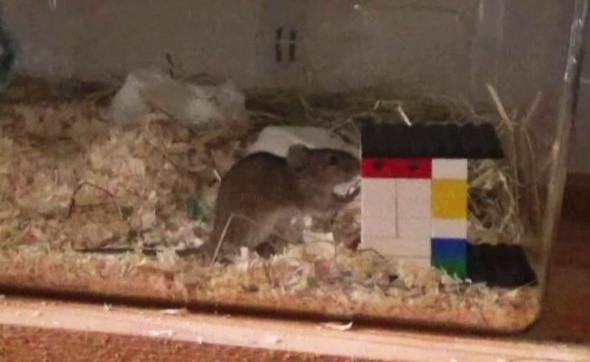
Here I focused on two small mammal species, striped field mice (Apodemus agrarius) and common voles (Microtus arvalis), tiny rodents that inhabit many of Berlin’s city parks and green areas, and are strictly non-commensal (you’ll never find them interested in the food in your pantry). I investigated among-individual differences between rural and urban rodents in relation to different aspects of behavioural flexibility, namely:
- Consistent behavioural traits expressing exploration and risk-taking in situ
- Behavioural flexibility ex situ
- Responses to novel stimuli
- Innovative problem solving
I became a fixed presence in different green areas within the CityScapeLabs in Berlin, and even more in the AgroScapeLabs in the Uckermark region, where fallow plots and meadows, together with the lowest human density in Germany, are representative of the classical habitat of the species.
When tested on the field, in their own home environment, urban rodents were more risk-taking and more explorative than rural conspecifics. This is likely because city animals are faced with numerous new challenges in their everyday life, and have to deal with higher levels of disturbance. In order to “make it”, they have to respond to these challenges by being bolder and more active. Similar findings are reported in the bird scientific literature.
Results from the common garden experiment were instead quite a surprise: while the country rodents had maintained comparable levels of risk-taking and exploration propensity, city dwellers had performed a considerable shift in their responses, which now resembled those of the country conspecifics. Additionally, the new levels of risk-taking and exploration activity were quite stable across the two tests in the lab. In other words, urban animals were not only more risk-taking and explorative, they were also more flexible in their behavioural responses. This ability to adjust behaviour to current circumstances might be in fact what determines the success of the individuals that arrive and survive in the city.
Responses to novelty did not differ between rural and urban conspecifics. Probably because for a small mammal being wary of novel stimuli is such an important survival skill, that is highly conserved, no matter how other traits can shift. Interestingly, when investigating the overall structure of the responses to novelty it turned out that responses are structured, clustering (i) speed, (ii) intensity, and (iii) responses to food into separate dimensions.
Finally, in terms of problem-solving, I found that while both rural and urban mice readily participated in the tests, they were not equally successful in solving them. In fact, the differences were striking, with urban mice being much better problem-solvers than the rural conspecifics. And this seemed to be due to their ability to innovate, since the most common non-cognitive factors that can affect problem-solving performance (motivation, persistence, motor diversity) were accounted for and did not seem to matter. One of the most relevant aspects in solving the different set-ups turned out to be the amount of time spent exploring the open puzzle. A longer interaction provides the animals with more information about the puzzle, thus enabling them to perform the appropriate action to access the reward later on. And with the same amount of time spent exploring the puzzle, urban mice had higher chances of success.
The better performance in innovative problem-solving in urban mice compared with rural conspecifics confirms previous findings in other species, particularly in birds; it would thus appear that even very different and phylogenetically distant species respond similarly to the challenges of human-altered environments, i.e. by sharpening their wits and expressing greater behavioural plasticity. Indeed, a high propensity for innovation would be particularly advantageous in dealing with environments that present challenges that rarely occur in a species’ native environment.
Overall, this ability to express a broader range of behavioural responses, and adjust these responses to match frequently-varying circumstances, might be in fact what determines the success of the individuals that arrive and survive in the city, ultimately enabling small mammals to thrive in the many forgotten corners of the big Berlin city.
Collaborators: A. Guenther (MPI Plön), J. A. Eccard, M. Dammhahn, C. Göttsche, E. Lösche, I. Müller, A. Schirmer (UniPotsdam)
Publications: Mazza & Guenther 2021 – Mazza et al. 2021 – Mazza et al. 2020 – Dammhahn et al. 2020